
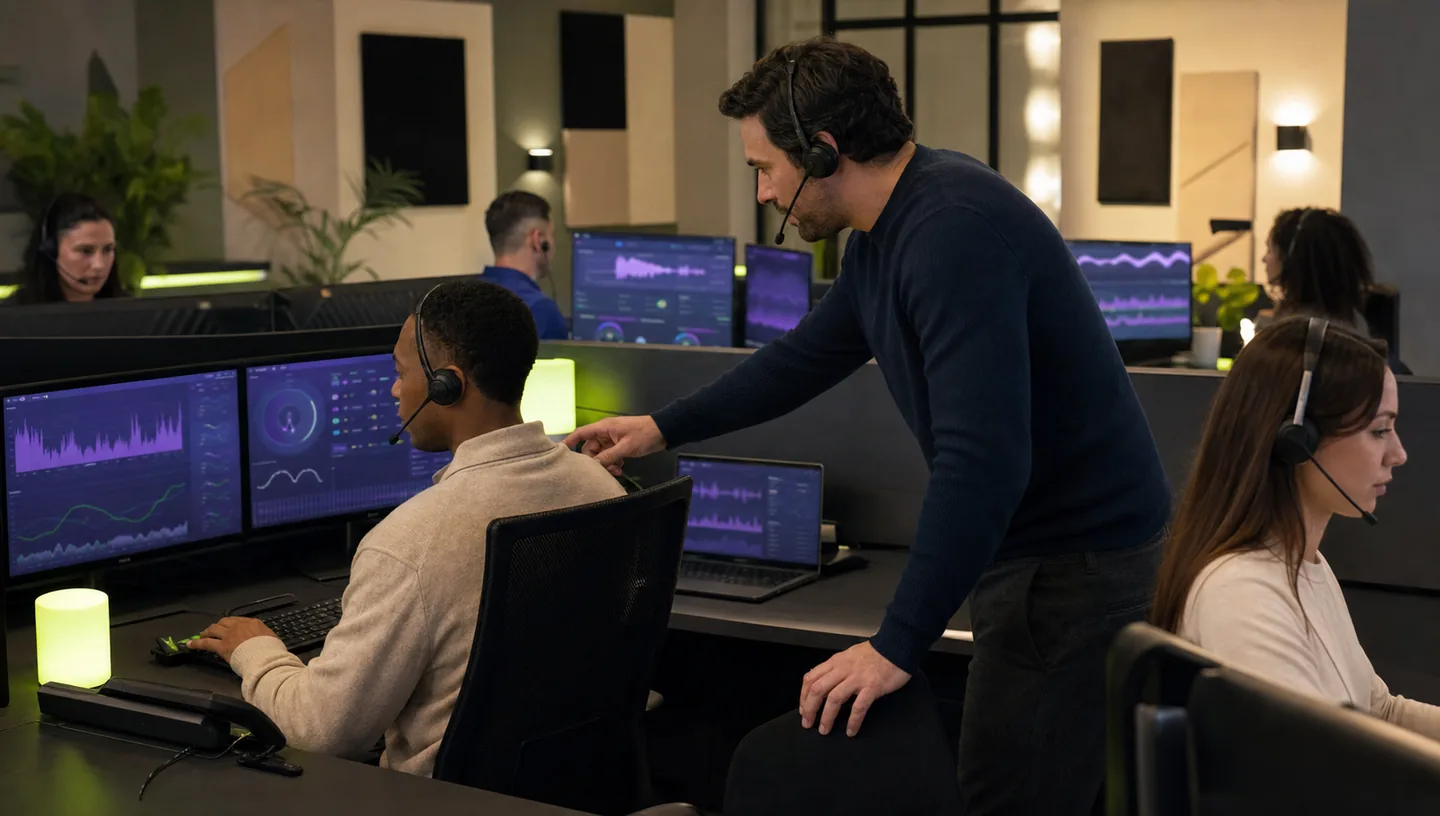
An AI employee can work all night. The question that matters is what happens when it's wrong at 3 a.m. — and who finds out.
Most AI-agent horror stories share one plot: the software was given autonomy and nobody was watching. The failure is rarely dramatic. It's a discount quoted slightly wrong, four hundred times. A follow-up sent to the one prospect who asked to be left alone. Small errors, compounding quietly, because no one was positioned to catch them.
Autonomy without accountability isn't productivity. It's risk running on a timer.
That's why every Stavatar staffer works inside four mechanisms. First, approval gates: before anything ships — a new call script, an ad campaign, a landing page — a human signs off. Second, escalation rules: when the AI is unsure, it doesn't guess. It stops, flags the situation, and hands it to a person.
Third, full work logs. Every staffer records everything it does, and you can read the transcript of any call, message, or commit — anytime, without asking. Fourth, a named human manager. Each staffer answers to one accountable person at Stavatar, with their name on the work. Not a support queue. A manager.


Some actions our AI employees never take alone: the final send on a new sequence, any change to a spend cap, and any deploy to production.
Those three stay behind a human approval every single time, no matter how routine they look. Not because the AI usually gets them wrong — it usually gets them right — but because they are the actions where a rare mistake is expensive and hard to undo.
None of this slows the work down; the gates sit at decision points, not in the middle of execution. It does mean you never have to take our word for what your staffer did. Trust isn't claimed in a pitch deck. Trust is earned in the log files.

4 Comments
Daniel M.
18 May 2026 ReplyHow granular are the approval gates in practice? If a human has to sign off on every individual email, I don't see where the speed advantage comes from.
Rachel T.
21 May 2026 ReplyThe work logs are the part I'd want in writing. Do clients get raw transcripts of calls and messages, or a summarized report — and how long are they retained?
Stavatar HQ
22 May 2026 ReplyRaw transcripts, not summaries — every call, message, and commit, readable anytime without asking. And to Daniel's question above: gates sit on new things, like a new sequence or script. Once approved, the staffer runs it freely and the log records every send.
Tom W.
26 May 2026 ReplyWould like a follow-up on the escalation rules — specifically how the AI decides it's unsure, and what the handoff to the human manager looks like in practice.
Leave a comment here
Your email address will not be published. Required fields are marked *